Elderflower
Sambucus nigra
Also called elder.
Take careOut of seasonNeeds care with identification, preparation or how much is eaten.
Is elderflower in season now?
As of : No: elderflower is out of season in the UK. Its season runs from May to July. It can be confused with hemlock and dwarf elder, which are poisonous: check every find with an expert before eating it.
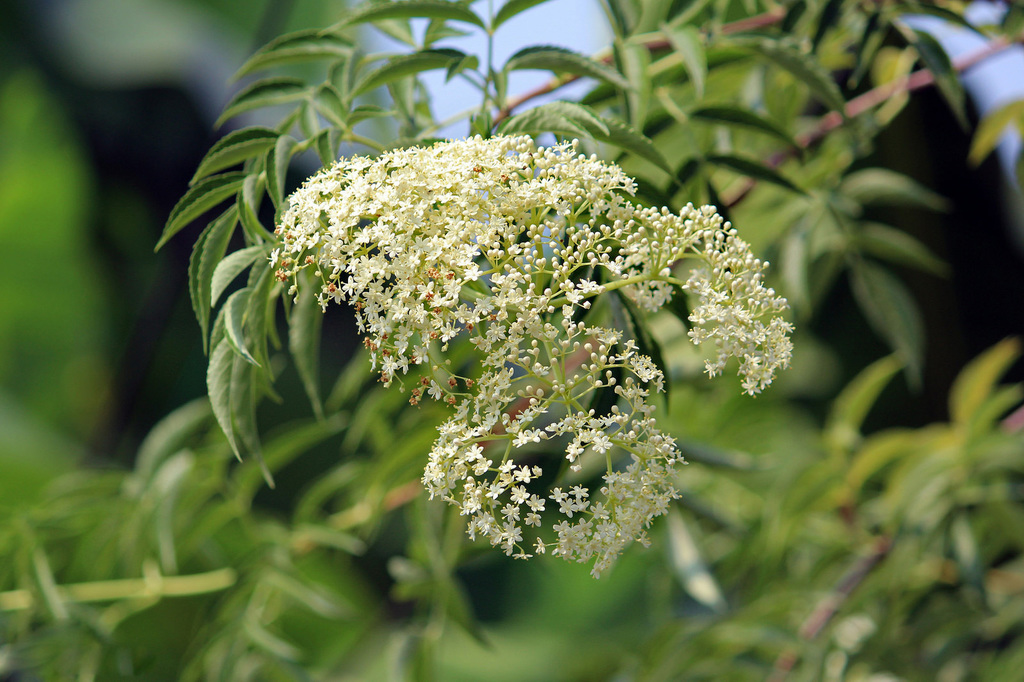
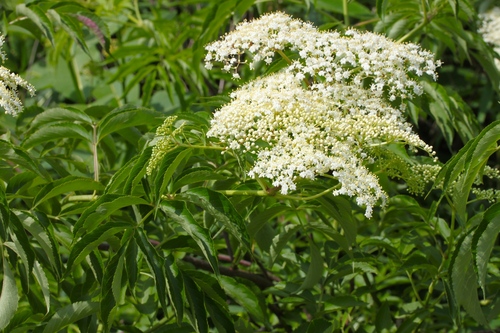
Elder is a shrub or small tree with corky, furrowed bark and leaves made of five to seven toothed leaflets. In late May and June it carries flat, creamy-white, heavily scented flower heads 10-25 cm across. Only the flowers (and later the cooked ripe berries) are used: the leaves, stems, bark and unripe berries are poisonous. Make sure the flowers are on a woody shrub. Hemlock, hogweed and other umbellifers have similar flat white heads but are soft-stemmed plants growing from the ground.
Parts gathered: flowers.
Season
May to July
Taller bars are the months with most records across the UK. The south usually runs a week or two ahead of the north.
Habitat
- Found in woodland and trees, scrub, hedges and heath, grassland and pasture and towns, parks, gardens and waste ground.
- Soil pH roughly 5.5 to 8.5.
- Mostly below about 450 m.


Where it is likely right now
Forecast for Wednesday 11 November. Zoom in for 5 km² detail, or open it on the full map.
It is not forecast anywhere in the UK today: it is out of season.
Look-alikes: tell them apart
Check every one of these before you pick. One matching feature is not enough: they all have to match. If you cannot tell them apart with confidence, leave it.
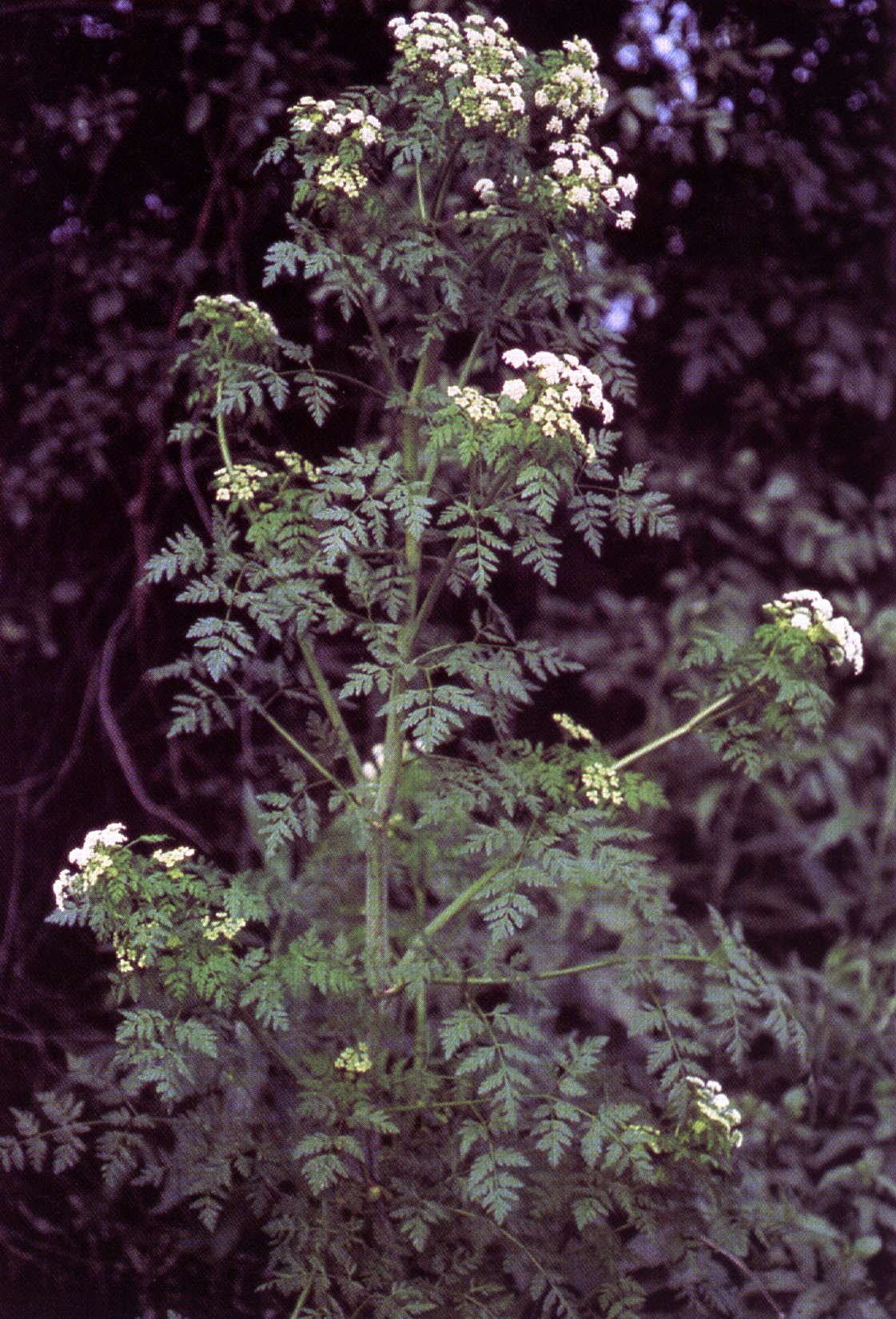
- A woody shrub or small tree with corky barkA soft, green-stemmed plant that grows fresh from the ground each year
- Grey-brown woody twigsSmooth, hollow and green, with purple blotches
- Five to seven broad, toothed leafletsFinely divided and ferny, like carrot tops
- Flowers sweet and headyThe whole plant smells mousy and unpleasant when crushed
ElderflowerHemlockDwarf elder
Sambucus ebulus
Poisonous
- Woody, with a trunk and barkSoft green stems from the ground each year, with no trunk
- Five to sevenSeven to thirteen, narrower
- Cream, with yellow anthersWhite tinged pink, with purple anthers
ElderflowerDwarf elderGiant hogweed
Heracleum mantegazzianum
Harmful to touch
- A woody shrub or small treeA giant soft-stemmed plant 2-5 m tall
- Woody twigsThick, hollow, bristly and blotched with purple
- Five to seven leafletsHuge and jagged, a metre or more across
ElderflowerGiant hogweedIts sap causes severe, long-lasting burns in sunlight. Do not touch it.
More field guides
A good book helps you learn what to look for. It is no substitute for checking a find with an expert. We earn a commission if you buy through these links, at no extra cost to you.
The Forager Handbook
A guide to the edible plants of Britain
Miles Irving (Ebury Press)
A plant-by-plant guide to the wild food plants of Britain.
Buy on Bookshop.org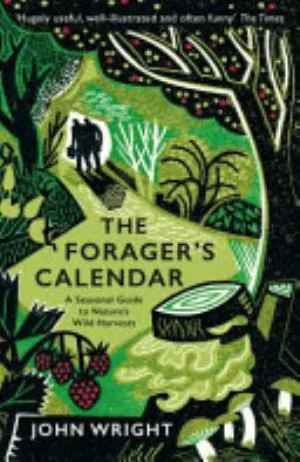
The Forager's Calendar
A seasonal guide to nature's wild harvests
John Wright (Profile Books)
A month-by-month guide to what to look for through the year in Britain.
Buy on Bookshop.orgQuestions about elderflower
- When is elderflower in season in the UK?
- Elderflower is in season in the UK from May to July, and is usually at its best in May, June and July. The south usually runs a week or two ahead of the north.
- Where does elderflower grow?
- Found in woodland and trees, scrub, hedges and heath, grassland and pasture and towns, parks, gardens and waste ground. Soil pH roughly 5.5 to 8.5. Mostly below about 450 m.
- What can elderflower be confused with?
- Elderflower can be confused with hemlock (poisonous), dwarf elder (poisonous) and giant hogweed. One matching feature is never enough: check every one, and confirm every find with an expert before eating it.