Skip to content
Foraging ForecastMy finds

Tell them apart

Learn the pair, not just the prize. 64 comparisons, 49 of them with something poisonous: what to check, feature by feature, before anything goes in the basket.

One matching feature is never enough: every one has to match. These notes are a way to learn what to look for; they are not a way to confirm a find. For that you need the specimen in your hand and someone who knows it.

Mushrooms

Amethyst deceiver Laccaria amethystina

  • Amethyst deceiverLilac fibrecap
    Gills
    Thick, widely spaced and deep violet; they stay violetCrowded; pale at first, then clay-brown
    Cap
    Rounded then flat, often dimpled, with no pointSilky, with a pointed centre that is often ochre
    Stem
    Tough and fibrous, violet like the capPaler and more fragile
    Spore print
    WhiteDull brown
    Smell
    FaintEarthy or mealy
  • Amethyst deceiver or lilac bonnet?

    Poisonous

    Amethyst deceiverLilac bonnet
    Smell
    FaintStrongly of radish when crushed
    Gills
    Thick, widely spaced and deep violetPale, whitish to pink
    Stem
    Tough and fibrous; twists without snappingHollow and brittle; snaps cleanly
    Cap
    Violet, fading to buffPinkish lilac, with fine lines at the edge when damp

Cep (penny bun) Boletus edulis

  • Cep (penny bun) or devil's bolete?

    Poisonous

    Cep (penny bun)Devil's bolete
    Pores
    White to yellow-greenOrange to blood red
    Cap
    BrownChalky white to pale grey
    Cut flesh
    Stays whiteTurns pale blue
    Where
    Widespread with many treesRare: under beech and oak on chalk and limestone in southern England
  • Cep (penny bun) or bitter bolete?

    Not for eating

    Cep (penny bun)Bitter bolete
    Pores
    White, then yellow-greenWhite, then pink
    Net on the stem
    Fine and white, on a pale stemCoarse and dark brown
    Spore print
    Olive-brownPinkish
  • Cep (penny bun)Bay bolete
    Stem
    Swollen and pale, with a fine white net near the topSlimmer, streaked brown, with no net
    Pores
    White, then yellow-green; they do not bruise bluePale yellow; they bruise blue-green when pressed
    Cap
    Like a crusty bun, 8-25 cm acrossChestnut brown, 5-15 cm, slightly sticky when wet

Chanterelle Cantharellus cibarius

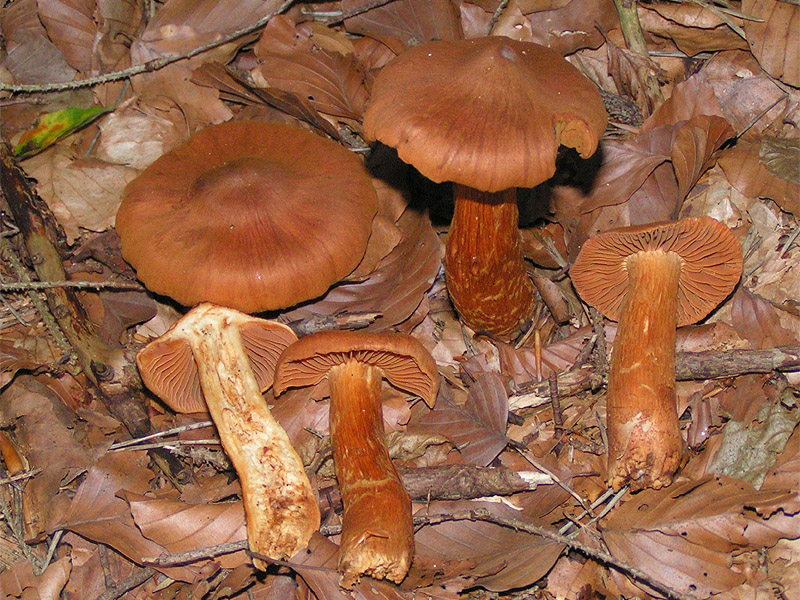
  • ChanterelleDeadly webcap
    Underside
    Blunt, forked, vein-like ridges running down the stemTrue gills: thick, widely spaced and rusty brown
    Colour
    Egg-yolk yellow all overTawny orange-brown to rusty
    Cap
    Funnel-shaped with a wavy edgePointed or domed, finely scaly
    Stem
    Smooth, the same yellow as the capBanded with yellowish snakeskin zones
    Spore print
    Pale cream to yellowishRusty brown
  • Chanterelle or jack o'lantern?

    Poisonous

    ChanterelleJack o'lantern
    Growth
    Singly or scattered, from the soilDense clusters from stumps and buried roots
    Underside
    Blunt ridgesTrue, sharp-edged gills
    Flesh
    Pale insideOrange inside
    Where
    WidespreadVery rare: a few sites in southern England, on oak and sweet chestnut
  • Chanterelle or false chanterelle?

    Can make you ill

    ChanterelleFalse chanterelle
    Underside
    Blunt ridges, like folds in the fleshTrue gills: thin, crowded, forking, deep orange
    Colour
    Even egg-yolk yellowOrange, darker at the centre
    Flesh
    Thick, firm and paleThin and soft
    Smell
    Faintly of apricotsMushroomy, not fruity
    Where
    In moss and leaf litter with treesConifer woods and heaths, often on rotting wood and needles

Field blewit Lepista personata

  • Field blewit or livid pinkgill?

    Poisonous

    Field blewitLivid pinkgill
    Stem
    Streaked with bright lilac-blueWhite to pale grey, never lilac
    Gills
    Off-white to flesh-colouredYellowish at first, then salmon pink
    Spore print
    Pale pinkAlso pink, so a spore print will not separate them
    Where
    Open pasture, often in ringsUnder oak and beech
  • Field blewit or webcaps with bluish stems?

    Poisonous

    Field blewitWebcaps with bluish stems
    Young gills
    Open to viewHidden at first by a cobweb-like veil
    Spore print
    Pale pinkRusty brown
    Where
    Open grasslandWoodland, with trees
  • Field blewit or clouded funnel?

    Can make you ill

    Field blewitClouded funnel
    Stem
    Lilac-blue streaksPale grey and swollen at the base, with no lilac
    Gills
    Joined to the stem with a notchRun slightly down the stem
    Cap
    Pale buffCloudy grey with a paler bloom
    Where
    GrasslandWoodland leaf litter and compost

Field mushroom Agaricus campestris

  • Field mushroomYellow stainer
    Cut the stem base
    White, sometimes faintly pinkTurns bright chrome yellow at once
    Smell
    Pleasant and mushroomyInk, carbolic or disinfectant, stronger when warmed
    Cap
    Rounded, 4-10 cmOften flat-topped, 5-15 cm; the edge yellows when rubbed
    Ring
    Thin and fragile, soon goneLarge and hanging, with a thick double edge
    Where
    Open, grazed pastureParks, gardens, hedges and wood edges
  • Field mushroomDeath cap
    Gills
    Pink when young, then chocolate brownWhite, and they stay white
    Stem base
    Tapered, with no bagSwollen and sitting in a white bag (volva), often below ground
    Spore print
    Dark chocolate brownWhite
    Cap
    WhiteUsually olive-green to yellowish, sometimes almost white
    Where
    Open grassland away from treesUnder oak and beech, sometimes in grass near them
  • Field mushroomDestroying angel
    Gills
    Pink, then chocolate brownPure white
    Stem base
    No bagA large white bag (volva)
    Spore print
    Dark chocolate brownWhite
    Where
    Open pastureDamp woodland with birch and beech
  • Field mushroomFool's funnel
    Gills
    Pink then brown, not joined to the stemWhitish and crowded, running slightly down the stem
    Ring
    A thin ring on the stemNo ring
    Size
    Cap 4-10 cmCap 2-5 cm
    Spore print
    Dark chocolate brownWhite

Giant puffball Calvatia gigantea

  • Giant puffballCommon earthball
    Skin
    Smooth, white and soft, like kid leatherThick, tough, yellowish-brown, warty or scaly
    Cut in half
    Pure white and even all the way throughPurplish black inside from an early stage, marbled with white
    Size
    Usually 20-50 cm across4-10 cm across
    Where
    Rich pasture, hedge bottoms, nettle bedsAcid soil under birch and oak, and on heaths
  • Giant puffballDeath cap
    Cut in half top to bottom
    Solid, even white flesh with no pattern in itThe outline of a small mushroom inside: cap, gills and stem
    Size
    Football-sized when readyThe 'egg' is the size of a hen's egg
    Where
    Open grassland and hedge bottomsUnder oak and beech
  • Giant puffballDestroying angel
    Cut in half top to bottom
    Solid, even white flesh with no pattern in itThe outline of a small mushroom inside: cap, gills and stem
    Size
    Football-sized when readyThe 'egg' is the size of a hen's egg
    Where
    Open grassland and hedge bottomsDamp, mossy woodland with birch and beech

Hen of the woods Grifola frondosa

  • Hen of the woods or giant polypore?

    Not for eating

    Hen of the woodsGiant polypore
    Fronds
    Many small, spoon-shaped, grey-brown caps 2-7 cm acrossFewer, large fans 10-30 cm across, tan to chestnut with darker zones
    Bruising
    Does not blackenPores and edges bruise black within minutes
    Tree
    Mostly oakMostly beech

Horse mushroom Agaricus arvensis

  • Horse mushroomYellow stainer
    Yellowing
    The cap bruises dull yellow slowly; the stem base does not flush yellow when cutThe flesh in the very base of the stem turns bright chrome yellow at once
    Smell
    AniseedInk, carbolic or disinfectant
    Ring
    Big and hanging, with a cogwheel pattern underneathLarge, with a thick double edge and no cogwheel
  • Horse mushroomDestroying angel
    Gills
    Greyish pink, then dark brownPure white
    Stem base
    No bagA large white bag (volva)
    Spore print
    Dark brownWhite
    Where
    Old pasture, parkland and vergesDamp woodland with birch and beech
  • Horse mushroomDeath cap
    Gills
    Greyish pink, then dark brownWhite, and they stay white
    Stem base
    No bagSwollen and sitting in a white bag (volva)
    Spore print
    Dark brownWhite
    Smell
    AniseedSweetish and sickly, stronger with age

Morel Morchella esculenta

  • Morel or false morel?

    Poisonous

    MorelFalse morel
    Cap
    A honeycomb of pits between ridgesFolded into brain-like lobes, with no pits
    Cut in half lengthways
    One clean hollow from the tip of the cap to the base of the stemSeveral irregular chambers, often with cottony stuffing
    Colour
    Yellow-brown to grey-brown or blackishRed-brown to chestnut
    Where
    Chalky or sandy soil, wood edges, old orchards, bark mulchSandy soil under pine

Oyster mushroom Pleurotus ostreatus

  • Oyster mushroom or angel's wings?

    Poisonous

    Oyster mushroomAngel's wings
    Colour
    Grey, blue-grey or brown abovePure white all over
    Flesh
    Thick and firmThin and fragile, almost see-through
    Wood
    Broadleaved trees, especially beechRotting conifer stumps and logs
    Where
    Throughout BritainMostly the Scottish Highlands and other northern and western conifer woods

Parasol Macrolepiota procera

  • Parasol or panther cap?

    Poisonous

    ParasolPanther cap
    Cap
    Brown scales that are part of the skin, around a dark central bumpPure white warts that rub off a smooth brown cap
    Stem
    Tall and slender, banded with brown snakeskin markingsWhite, with no bands
    Ring
    Thick, double-edged, and slides up and down the stemThin, skirt-like and fixed
    Stem base
    A plain bulb with no rim or bagA bulb with a distinct gutter-like rim round the top
    Size
    Cap 10-30 cmCap 6-11 cm
  • Parasol or dapperlings?

    Deadly

    ParasolDapperlings
    Size
    Cap 10-30 cm when open, on a stem 15-40 cm tallThe deadly ones are small: caps mostly 2-7 cm
    Ring
    Thick, double-edged and movableFlimsy, or just a ragged zone; it does not slide
    Stem
    Brown snakeskin bands on a pale groundNo snakeskin bands; often pinkish or scaly towards the base

    Leave any 'parasol' whose open cap is less than 12 cm across.

  • Parasol or shaggy parasol?

    Can make you ill

    ParasolShaggy parasol
    Cut flesh
    Stays white or turns faintly pinkTurns saffron orange, then red-brown, most strongly in the stem
    Stem
    Snakeskin bandsPlain and smooth, with a big bulb at the base
    Cap scales
    Flat brown scales on a pale groundCoarse, shaggy, upturned scales
    Where
    Open grasslandWoods, hedges, gardens and compost

Shaggy inkcap Coprinus comatus

  • Shaggy inkcap or common inkcap?

    Poisonous

    Shaggy inkcapCommon inkcap
    Cap
    A tall white cylinder covered in shaggy, upturned scalesGrey-brown, egg-shaped then bell-shaped, smooth and finely grooved
    Growth
    Singly or in loose groupsDense tufts, often from buried wood

    Causes sickness if alcohol is drunk within a few days either side.

  • Shaggy inkcap or magpie inkcap?

    Can make you ill

    Shaggy inkcapMagpie inkcap
    Cap
    White, with white to pale brown shaggy scalesDark brown to black with white patches, like a magpie
    Where
    Verges, lawns and disturbed groundBeech woods on chalk and limestone

St George's mushroom Calocybe gambosa

  • St George's mushroomDeadly fibrecap
    Season
    April to June, at its best around St George's DayLate May to autumn, so the two overlap in May and June
    Bruising
    Stays creamy whiteSlowly stains brick red where handled, and with age
    Cap
    Smooth, domed and fleshyConical then flat, silky, streaked with fibres and splitting at the edge
    Smell
    Strong and mealy, like wet flour or cucumberFaint when young, never mealy
    Gills and spore print
    Crowded white gills; white printGills turn olive-brown; dull brown print
  • St George's mushroomFool's funnel
    Size
    Stout: cap 5-15 cm on a thick stemSmall: cap 2-5 cm on a thin stem
    Season
    SpringSummer and autumn
    Cap
    Smooth and creamyFrosted with a whitish bloom, often cracking in rings
    Gills
    Narrow and crowded, joined to the stem with a notchRun slightly down the stem
  • St George's mushroom or livid pinkgill?

    Poisonous

    St George's mushroomLivid pinkgill
    Season
    SpringLate summer and autumn
    Gills
    White to creamYellowish at first, then salmon pink
    Spore print
    WhitePink
    Smell
    MealyAlso mealy, so smell will not separate them
    Where
    Grassland, verges and wood edgesUnder oak and beech, often on clay

Trumpet chanterelle Craterellus tubaeformis

  • Trumpet chanterelleDeadly webcap
    Underside
    Shallow, forked, greyish ridges running down the stemTrue gills: thick, widely spaced and rusty brown
    Stem
    Hollow like a straw, yellow and smoothSolid and tawny, with yellowish snakeskin bands
    Cap
    A thin funnel, usually with a hole in the middle leading down the stemPointed or domed and finely scaly; never a funnel
    Spore print
    White to creamRusty brown

    The two grow side by side in the same mossy woods, so check every stem as you pick.

  • Trumpet chanterelle or chanterelle?

    Dangerous look-alikes

    Trumpet chanterelleChanterelle
    Colour
    Brown cap, yellow stem, greyish ridgesEgg-yolk yellow all over
    Stem
    Thin and hollowThick and solid
    Season
    September into early winterJuly to November
  • Trumpet chanterelle or jellybaby?

    Not for eating

    Trumpet chanterelleJellybaby
    Head
    A thin funnel with ridges underneathA rounded, lumpy, olive-yellow knob with no ridges
    Texture
    Thin and pliableRubbery and slimy

Velvet shank Flammulina velutipes

  • Velvet shankFuneral bell
    Stem
    No ring; darkens to velvety black-brown from the base upA thin ring, which can rub off; fibrous, never velvety
    Spore print
    WhiteRusty brown
    Cap
    Slippery and shiny when wet, orange-brownHoney-brown, drying paler from the centre so it looks two-toned
    Season
    Mainly winter, right through frostsMainly autumn, sometimes into winter
    Wood
    Broadleaved wood: elm, ash, willow, gorseConifer and broadleaved stumps, logs and woodchip
  • Velvet shank or sulphur tuft?

    Poisonous

    Velvet shankSulphur tuft
    Cap
    Orange-brown and slipperySulphur yellow with an orange centre, not slippery
    Gills
    White to pale yellowGreenish yellow, turning olive and then purple-black
    Spore print
    WhitePurple-brown
    Stem
    Velvety and dark towards the baseYellow and smooth, with a faint ring zone

Wood blewit Lepista nuda

  • Wood blewitLilac fibrecap
    Size
    Stout: cap 6-12 cm, stem as thick as a thumbSmall: cap 1.5-4 cm, stem a few millimetres thick
    Cap
    Smooth and domed, lilac fading to tanSilky and pointed, lilac with an ochre centre
    Gills
    Lilac, fading to buffPale at first, then clay-brown
    Spore print
    Pale pinkDull brown
    Smell
    Perfumed and fruityEarthy or mealy
  • Wood blewit or purple webcaps?

    Poisonous

    Wood blewitPurple webcaps
    Young gills
    Open to view, with no veilCovered at first by a cobweb-like veil, which leaves rusty threads on the stem
    Spore print
    Pale pinkRusty brown
    Older gills
    Lilac fading to buffTurn rusty brown as the spores ripen

    Some webcaps are deadly, and none should be eaten.

  • Wood blewit or field blewit?

    Dangerous look-alikes

    Wood blewitField blewit
    Colour
    Lilac to violet cap, gills and stem when youngOnly the stem is lilac; the cap is pale buff and the gills off-white
    Where
    Leaf litter, compost, hedge bottoms, under conifersOld pasture, often in rings

Plants

Alexanders Smyrnium olusatrum

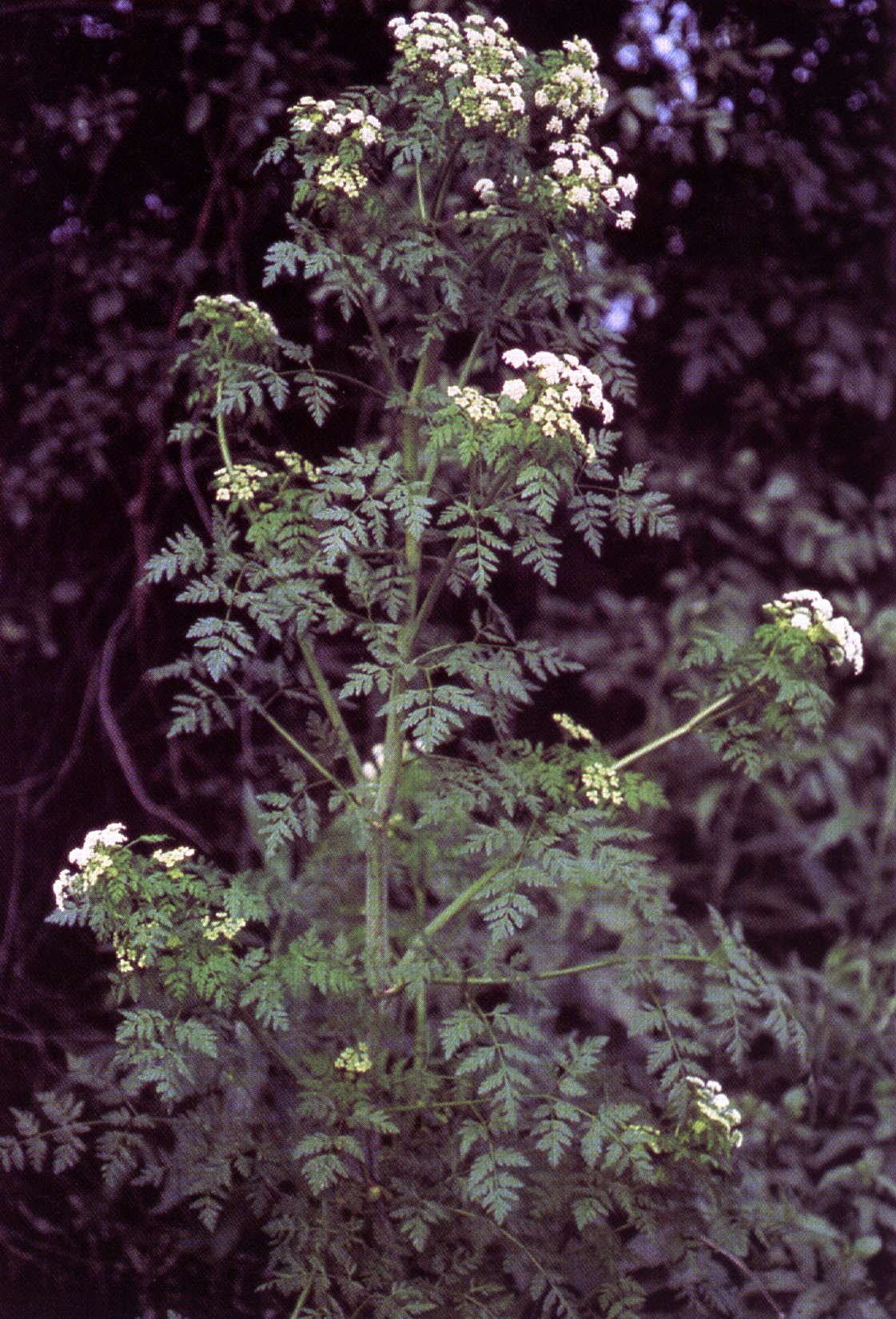
  • AlexandersHemlock water-dropwort
    Flowers
    Yellow-green, March to JuneWhite, June and July
    Leaves
    Glossy dark green, divided into broad, bluntly toothed leaflets in threesDivided several times into small, wedge-shaped leaflets, like flat-leaved parsley
    Where
    Dry banks, lanes, cliffs and hedge feet near the seaWet ground: ditches, stream sides and marshy meadows
    Roots
    One stout taprootA bunch of pale, swollen, finger-like tubers
    Seeds
    Black when ripePale brown
  • Alexanders or hemlock?

    Poisonous

    AlexandersHemlock
    Stem
    Green and ridged, with no blotchesSmooth and hollow, with purple blotches
    Leaves
    Broad, glossy leaflets in threesFinely cut and ferny
    Flowers
    Yellow-greenWhite
    Smell
    Aromatic, like celeryMousy and unpleasant

Elderflower Sambucus nigra

  • Elderflower or hemlock?

    Poisonous

    ElderflowerHemlock
    Plant
    A woody shrub or small tree with corky barkA soft, green-stemmed plant that grows fresh from the ground each year
    Stem
    Grey-brown woody twigsSmooth, hollow and green, with purple blotches
    Leaves
    Five to seven broad, toothed leafletsFinely divided and ferny, like carrot tops
    Smell
    Flowers sweet and headyThe whole plant smells mousy and unpleasant when crushed
  • Elderflower or dwarf elder?

    Poisonous

    ElderflowerDwarf elder
    Plant
    Woody, with a trunk and barkSoft green stems from the ground each year, with no trunk
    Leaflets
    Five to sevenSeven to thirteen, narrower
    Flowers
    Cream, with yellow anthersWhite tinged pink, with purple anthers
  • Elderflower or giant hogweed?

    Harmful to touch

    ElderflowerGiant hogweed
    Plant
    A woody shrub or small treeA giant soft-stemmed plant 2-5 m tall
    Stem
    Woody twigsThick, hollow, bristly and blotched with purple
    Leaves
    Five to seven leafletsHuge and jagged, a metre or more across

    Its sap causes severe, long-lasting burns in sunlight. Do not touch it.

Hawthorn Crataegus monogyna

  • Hawthorn or red berries on hedgerow climbers?

    Poisonous

    HawthornRed berries on hedgerow climbers
    Plant
    A thorny shrub or tree with small, deeply lobed leavesClimbers that twine or scramble through the hedge, with no thorns
    Berries
    Dull dark red, each with one hard stone and mealy fleshGlossy, juicy and see-through, with several seeds
    How they hang
    Upright bunches on woody spursStrings or loose drooping clusters along soft stems

Sorrel Rumex acetosa

  • SorrelLords-and-ladies
    Lobes at the leaf base
    Sharp points aimed straight back down the stalk, like a barbed arrowheadRounded, and spreading outwards
    Veins
    Fine side veins that run off towards the edgeA net, with one vein looping round just inside the edge
    Surface
    Matt and thinGlossy and thicker, often with purple-black spots
    Where
    Open grassland and meadowsShade: woods and hedge bottoms, though the two can meet at the foot of a hedge

Three-cornered leek Allium triquetrum

  • Three-cornered leek or bluebell, snowdrop and daffodil leaves?

    Poisonous

    Three-cornered leekBluebell, snowdrop and daffodil leaves
    Smell
    Onion or garlic when crushedNo onion smell
    Flower stem
    Three sharp cornersRound or flattened
    Flowers
    Drooping white bells, each petal with a green stripeBlue bells, white snowdrops or yellow trumpets

Wild garlic Allium ursinum

  • Wild garlicLords-and-ladies
    Leaf shape
    A long pointed oval that narrows smoothly into its stalkArrow-shaped, with two lobes pointing back at the base
    Veins
    Run side by side along the length of the leafA net of branching veins, with one running round the edge
    Surface
    Soft, thin and mattGlossy and thicker, often with purple-black spots
    Smell
    Garlic when crushedNo garlic smell, but garlic on your fingers can fool you
  • Wild garlicLily of the valley
    How the leaves grow
    Each leaf on its own stalk, straight from the groundTwo or three leaves rising together from one stem, wrapped round each other at the base
    Leaf
    Soft and limp; wilts quicklyFirm and leathery
    Flowers
    A round head of white starsA one-sided spray of nodding white bells
    Smell
    GarlicNo garlic smell
  • Wild garlic or meadow saffron?

    Deadly

    Wild garlicMeadow saffron
    How the leaves grow
    Each leaf on its own stalkSeveral stalkless leaves in a tight tuft, often around a seed pod in spring
    Leaf
    Thin and softThick, glossy and strap-shaped
    Smell
    GarlicNone
    Where
    Shady woods and hedge banksDamp meadows and wood edges; uncommon, and also grown in gardens

Berries & Nuts

Bilberry Vaccinium myrtillus

  • BilberryDeadly nightshade
    Plant
    A knee-high wiry shrub with green, angled twigsA bushy, soft plant up to 1.5 m tall
    Berry
    About 8 mm, blue-black with a grey bloom and a flat round scar on the endThe size of a small cherry, shiny black, sitting on a green five-pointed star
    Where
    Moors, heaths and acid woodlandChalk and limestone: scrub, wood edges, quarries and old walls

Elderberry Sambucus nigra

  • Elderberry or dwarf elder?

    Poisonous

    ElderberryDwarf elder
    Plant
    A woody shrub or small treeSoft green stems from the ground each year, with no trunk
    Berry clusters
    Heavy and drooping when ripeHeld upright
  • Elderberry or wild privet and buckthorn?

    Poisonous

    ElderberryWild privet and buckthorn
    Leaves
    Each leaf is made of five to seven toothed leafletsSingle, undivided leaves
    Berries
    Tiny, in big flat drooping sprays on red-purple stalksLarger, in small tight clusters

Sloe Prunus spinosa

  • Sloe or deadly nightshade?

    Poisonous

    SloeDeadly nightshade
    Plant
    A dense, woody, thorny shrub with dark barkA soft, green-stemmed, bushy plant with no thorns
    Berry
    Blue-black with a pale waxy bloom; one hard stoneShiny jet black with no bloom; many small seeds; sits on a green five-pointed star
    Leaves
    Small ovals 2-4 cm long, finely toothedLarge, soft, pointed ovals up to 20 cm long, with no teeth
  • Sloe or buckthorn?

    Poisonous

    SloeBuckthorn
    Berry
    Has a waxy bloom and a single stoneShiny black with no bloom and two to four seeds, in clusters
    Leaves
    Set singly along the twigIn near-opposite pairs, with veins that curve towards the tip
    Thorns
    Long thorns all along the branchesA single thorn at the tip of some twigs

Sweet chestnut Castanea sativa

  • Sweet chestnutHorse chestnut
    Husk
    A dense ball of fine, needle-sharp spines, like a small hedgehogThick, leathery and green, with a few short, stout spikes
    Nut
    Flattened on one side with a pointed, tufted tip; two or three in a huskRound and glossy with a large pale scar and no point; usually one in a husk
    Leaves
    Single long leaves with saw-toothed edgesHand-shaped: five to seven leaflets from one point

To recognise, not to gather

Poisonous species, and one that is illegal to pick, set against the things they are mistaken for.

Fool's funnel Clitocybe rivulosa

  • Fool's funnel or fairy ring champignon?

    Gathered by foragers

    Fool's funnelFairy ring champignon
    Gills
    Crowded and whitish, running slightly down the stemWidely spaced and cream, not running down the stem
    Cap
    Frosted white, flat or slightly dishedTan to buff, with a broad bump in the middle
    Stem
    Soft; breaks easilyTough and wiry; bends without snapping

    Both grow in rings on the same lawns, often mixed together.

Funeral bell Galerina marginata

  • Funeral bell or sheathed woodtuft?

    Gathered by foragers

    Funeral bellSheathed woodtuft
    Stem below the ring
    Silky and fibrous, with no scalesCovered in small, dark, upturned scales
    Smell when crushed
    MealyPleasant and mushroomy
    Growth
    Small groupsBig, dense tufts on broadleaved stumps

    People who gather sheathed woodtuft have died after picking funeral bells by mistake.

Liberty cap Psilocybe semilanceata

  • Liberty capFuneral bell
    Where it grows
    From soil among grass, never on woodOn rotting wood, stumps and woodchip, which may be buried so that it seems to come from the ground
    Cap
    Sharply conical with a small nipple, 0.5-2.5 cm acrossDomed to flat, 2-6 cm across, with no sharp nipple
    Stem
    Thin and wavy, with no ringHas a thin ring, at least when young
    Gills
    Turn dark purple-brownRusty brown

    The funeral bell is deadly.

  • Liberty cap or conecaps?

    Deadly

    Liberty capConecaps
    Cap
    Sticky when wet, with a nipple and a skin that peels awayMatt, a plain blunt cone with no nipple
    Gills
    Dark purple-brown when matureRusty or cinnamon brown
    Stem
    Wavy and pliantStraight and very fragile

    A few conecaps contain the same toxins as the death cap.

  • Liberty cap or fibrecaps?

    Poisonous

    Liberty capFibrecaps
    Cap
    Smooth, and sticky when wetMatt and streaked with fibres from the centre, often splitting at the edge
    Gills
    Dark purple-brownClay-brown
    Where
    Open grassland, away from treesNearly always near trees: path edges, parkland, lawns under trees
  • Liberty cap or mottlegills?

    Not for eating

    Liberty capMottlegills
    Cap
    Sharply pointed, with a nippleA rounded bell or dome with no nipple
    Gills
    Evenly darkMottled with dark and pale patches
    Where
    Unfertilised pastureLawns, and on or near dung

Panther cap Amanita pantherina

  • Panther cap or blusher?

    Can make you ill

    Panther capBlusher
    Warts
    Pure whiteGreyish or dirty pink
    Damaged flesh
    Stays whiteSlowly turns pink, especially where insects have eaten it
    Ring
    Smooth on its upper sideMarked with fine grooves on its upper side
    Stem base
    A bulb with a distinct gutter-like rimA bulb with no rim