Morel
Morchella esculenta
Also called common morel, yellow morel, black morel.
Dangerous look-alikesOut of seasonCan be confused with seriously poisonous species. Learn the look-alikes first.
Is morel in season now?
As of : No: morel is out of season in the UK. Its season runs from March to May. It can be confused with false morel, which is poisonous: check every find with an expert before eating it.


A spring fungus with a honeycomb cap of deep pits and ridges on a pale stem; cut lengthways, the whole fruit body is one hollow chamber. Found on chalky or sandy soil in open woodland, old orchards, dunes and scrub, and black morels increasingly on bark mulch in gardens and car parks. The toxic false morel has a brain-like, lobed cap and a chambered, cottony interior. Morels are poisonous raw and must be thoroughly cooked.
Parts gathered: fruiting body.
Season
March to May
Taller bars are the months with most records across the UK. The south usually runs a week or two ahead of the north.
Habitat
- Found in woodland and trees, towns, parks, gardens and waste ground and grassland and pasture.
- Grows with ash, elm and apple.
- Fruits from the ground.
- Commonest on chalk, limestone, mixed lime-rich rocks and soft clays and sands.
- Prefers lime-rich soils.
- Mostly below about 350 m.
Where it is likely right now
Forecast for Wednesday 11 November. Zoom in for 5 km² detail, or open it on the full map.
It is not forecast anywhere in the UK today: it is out of season.
Look-alikes: tell them apart
Check every one of these before you pick. One matching feature is not enough: they all have to match. If you cannot tell them apart with confidence, leave it.

- A honeycomb of pits between ridgesFolded into brain-like lobes, with no pits
- One clean hollow from the tip of the cap to the base of the stemSeveral irregular chambers, often with cottony stuffing
- Yellow-brown to grey-brown or blackishRed-brown to chestnut
- Chalky or sandy soil, wood edges, old orchards, bark mulchSandy soil under pine
MorelFalse morel
More field guides
A good book helps you learn what to look for. It is no substitute for checking a find with an expert. We earn a commission if you buy through these links, at no extra cost to you.
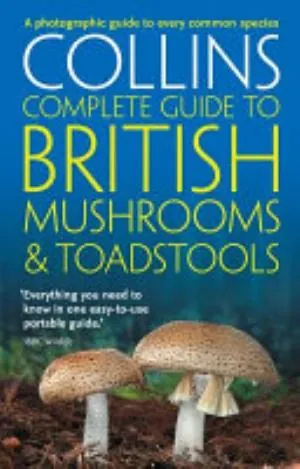
Collins Complete British Mushrooms and Toadstools
The essential photograph guide to Britain's fungi
Paul Sterry and Barry Hughes (Collins)
A photographic identification guide, useful for checking what else a find could be.
Buy on Bookshop.org
The Forager's Calendar
A seasonal guide to nature's wild harvests
John Wright (Profile Books)
A month-by-month guide to what to look for through the year in Britain.
Buy on Bookshop.orgThe law
Some sites ban or restrict fungi picking through byelaws or codes of conduct, for example Epping Forest and Forestry England's New Forest. Picking to sell always needs the landowner's permission. See the law page for the general rules.
See the overview of UK foraging law. This is not legal advice.
Questions about morel
- When is morel in season in the UK?
- Morel is in season in the UK from March to May, and is usually at its best in April. The south usually runs a week or two ahead of the north.
- Where does morel grow?
- Found in woodland and trees, towns, parks, gardens and waste ground and grassland and pasture. Grows with ash, elm and apple. Fruits from the ground. Commonest on chalk, limestone, mixed lime-rich rocks and soft clays and sands. Prefers lime-rich soils. Mostly below about 350 m.
- What can morel be confused with?
- Morel can be confused with false morel (poisonous). One matching feature is never enough: check every one, and confirm every find with an expert before eating it.