Chanterelle
Cantharellus cibarius
Also called girolle.
Dangerous look-alikesNearly overCan be confused with seriously poisonous species. Learn the look-alikes first.
Is chanterelle in season now?
As of : Only just: chanterelle is nearly over for the year in the UK. Its season runs from July to November. It can be confused with deadly webcap and jack o'lantern, which are poisonous: check every find with an expert before eating it.

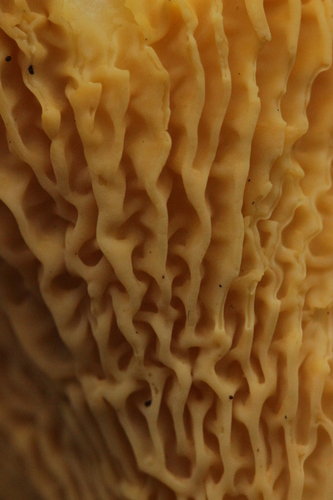
Egg-yolk yellow, funnel-shaped, with a wavy margin and blunt, forked, vein-like ridges (not true gills) running down the stem; the flesh is pale and smells faintly of apricots. Grows in moss and leaf litter under birch, oak, beech and pine on acid soils, most abundantly in Scotland and the west. The false chanterelle is more orange with crowded, true gills. The deadly webcap, a tawny mushroom of the same mossy woods, has been mistaken for it with fatal results.
Parts gathered: cap, stem.
Season
July to November
Taller bars are the months with most records across the UK. The south usually runs a week or two ahead of the north.
Habitat
- Found in woodland and trees.
- Grows with birch, oak, beech, pine and spruce.
- Fruits from the ground.
- Commonest on sandstone, granite and other acid rocks, hard, old metamorphic rocks and mudstone and shale.
- Prefers acid soils.

Where it is likely right now
Forecast for Wednesday 11 November. Zoom in for 5 km² detail, or open it on the full map.
Best counties today
- StirlingSlim19
- HighlandSlim19
- Argyll and ButeSlim18
- Derry City and StrabaneSlim17
- Perth and KinrossSlim16
- Dumfries and GallowaySlim16
- MoraySlim15
- AberdeenshireSlim14
- Na h-Eileanan SiarSlim13
- North AyrshireSlim12
- Shetland IslandsSlim12
- South AyrshireSlim12
Look-alikes: tell them apart
Check every one of these before you pick. One matching feature is not enough: they all have to match. If you cannot tell them apart with confidence, leave it.
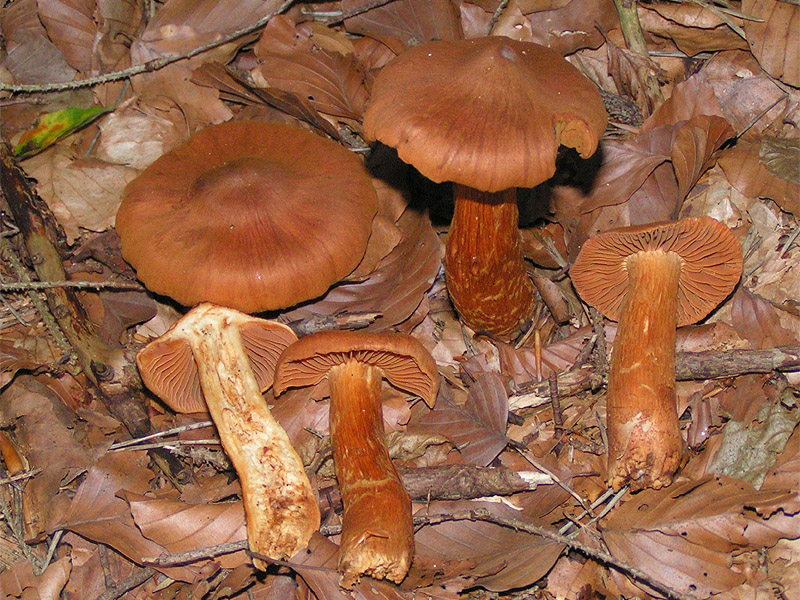
- Blunt, forked, vein-like ridges running down the stemTrue gills: thick, widely spaced and rusty brown
- Egg-yolk yellow all overTawny orange-brown to rusty
- Funnel-shaped with a wavy edgePointed or domed, finely scaly
- Smooth, the same yellow as the capBanded with yellowish snakeskin zones
- Pale cream to yellowishRusty brown
ChanterelleDeadly webcapJack o'lantern
Omphalotus illudens
Poisonous
- Singly or scattered, from the soilDense clusters from stumps and buried roots
- Blunt ridgesTrue, sharp-edged gills
- Pale insideOrange inside
- WidespreadVery rare: a few sites in southern England, on oak and sweet chestnut
ChanterelleJack o'lanternFalse chanterelle
Hygrophoropsis aurantiaca
Can make you ill
- Blunt ridges, like folds in the fleshTrue gills: thin, crowded, forking, deep orange
- Even egg-yolk yellowOrange, darker at the centre
- Thick, firm and paleThin and soft
- Faintly of apricotsMushroomy, not fruity
- In moss and leaf litter with treesConifer woods and heaths, often on rotting wood and needles
ChanterelleFalse chanterelle
- Egg-yolk yellow all overBrown cap, yellow stem, greyish ridges
- Thick and solidThin and hollow
- July to NovemberSeptember into early winter
ChanterelleTrumpet chanterelle
More field guides
A good book helps you learn what to look for. It is no substitute for checking a find with an expert. We earn a commission if you buy through these links, at no extra cost to you.
Collins Complete British Mushrooms and Toadstools
The essential photograph guide to Britain's fungi
Paul Sterry and Barry Hughes (Collins)
A photographic identification guide, useful for checking what else a find could be.
Buy on Bookshop.org
The Forager's Calendar
A seasonal guide to nature's wild harvests
John Wright (Profile Books)
A month-by-month guide to what to look for through the year in Britain.
Buy on Bookshop.orgThe law
Some sites ban or restrict fungi picking through byelaws or codes of conduct, for example Epping Forest and Forestry England's New Forest. Picking to sell always needs the landowner's permission. See the law page for the general rules.
See the overview of UK foraging law. This is not legal advice.
Questions about chanterelle
- When is chanterelle in season in the UK?
- Chanterelle is in season in the UK from July to November, and is usually at its best in August and September. The south usually runs a week or two ahead of the north.
- Where does chanterelle grow?
- Found in woodland and trees. Grows with birch, oak, beech, pine and spruce. Fruits from the ground. Commonest on sandstone, granite and other acid rocks, hard, old metamorphic rocks and mudstone and shale. Prefers acid soils.
- What can chanterelle be confused with?
- Chanterelle can be confused with deadly webcap (poisonous), jack o'lantern (poisonous), false chanterelle and trumpet chanterelle. One matching feature is never enough: check every one, and confirm every find with an expert before eating it.